Creatine can support cognitive function—when it’s stated
Beyond training support, the clearest documented non-muscle benefit in this selection is cognitive function support—and it’s specifically called out on Creapure® Creatine Monohydrate - Unflavored (50 Servings). If cognitive support is your priority, the most practical way to shop is to choose a product that explicitly mentions it in the description, then confirm the serving size so you can use it consistently.
Other non-muscle benefits shown in these product descriptions relate to energy metabolism. The MRI® Performance creatine monohydrate describes creatine as a naturally occurring molecule that plays a key role in explosive energy metabolism and notes that during exercise, creatine stores help reload ATP. That’s not a “brain claim,” but it is a documented way these products frame creatine’s role beyond muscle-building language.
What “cognitive function support” means on a product page
When a creatine product uses wording like “supports cognitive function,” it signals that the brand is positioning the formula for mental performance alongside physical performance. Use that as your filter first—then decide on your preferred format (unflavored powder you can mix into water, smoothies, or pre-workout routines) and look for straightforward dosing (for example, 5 g per serving is listed on the Creapure® option).
Keep it consistent and simple
For shoppers who want benefits beyond the gym, consistency matters more than complexity. Pick one product with the claim you care about, match it to a routine you’ll actually follow, and stick with the same daily serving so you can evaluate how it fits into your day.
Two “beyond muscle” angles shown in these creatine descriptions
Within this lineup, product pages highlight two distinct non-muscle themes: cognitive function support and ATP/energy metabolism support during short-burst efforts. Not every creatine product mentions both, so the fastest way to choose is to decide which angle you want called out on the label.
Cognitive function support (label-specific)
If your goal includes mental performance, focus on formulas that explicitly mention cognitive function in the description. The Creapure® option does, while also listing practical specs like 99.9% purity and 5 g per serving. Those details make it easier to compare apples-to-apples across products and keep your routine consistent.
Energy metabolism and ATP reloading (training-adjacent, but not just “muscle”)
MRI® Performance positions creatine as part of explosive energy metabolism and describes how creatine stores reload ATP during exercise—useful language if you’re shopping for support during sprints, starts, or the first hard efforts of a set. It’s also described as micronized, flavorless, and made with no fillers or additives, which can matter if you prefer a simple mix-in that doesn’t change the taste of your drink.
Capsules vs powders: how the format changes your follow-through
Powders work well if you want to stack creatine into a daily shake or hydration routine. If you prefer a no-mixing approach, PMD® CR5® offers capsules and is formulated with five forms of creatine, with the description emphasizing uptake/recovery and ATP-related energy for muscle contraction. Choose the format that makes daily use easiest—because that’s what drives real-world consistency.
How to choose creatine for benefits beyond training support
Start by shopping the exact wording in the product description. In this assortment, cognitive support is not implied—it’s stated on specific listings. Energy metabolism/ATP language is also stated on specific listings. Decide which “beyond muscle” message you want documented on the label, then narrow by purity, format, and serving size.
Step 1: Pick the benefit statement you want to see
- For cognitive function support: choose a product that directly mentions it, such as the Creapure® creatine monohydrate listing.
- For ATP/energy metabolism positioning: look for descriptions that talk about explosive energy metabolism and ATP reloading during exercise, like MRI® Performance creatine monohydrate.
Step 2: Compare the “simplicity signals”
- Purity callouts: Creapure® lists 99.9% purity; MRI® Performance is described as 100% pure with no fillers or additives.
- Serving clarity: Creapure® lists 5 g per serving; other powders may list servings per container (helpful for planning).
- Texture/mixability cues: “micronized” and “flavorless” can be useful if you want an easy add-in.
Step 3: Choose a format you’ll use daily
- Powder: best for mixing into water, smoothies, or a pre-workout routine.
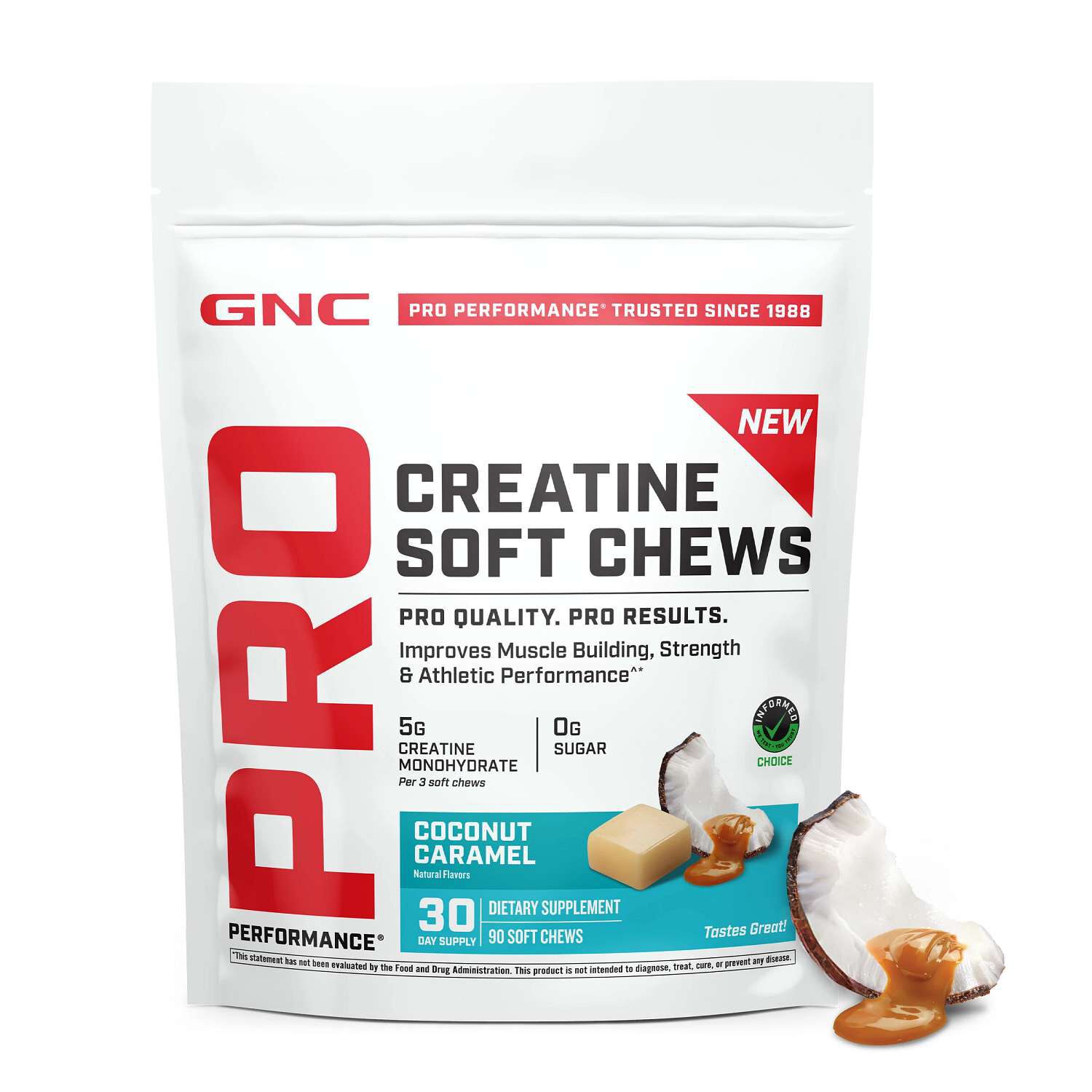
- Capsules: best if you want portability and no mixing (PMD® CR5® is a capsule option).
Once you pick, keep your routine steady for a fair comparison—same serving, same time of day, and the same mix-in method.
Why shop creatine at GNC
Big goals are built on daily wins—and the right supplement choice starts with clarity. At GNC, the focus is on helping you compare products by what’s actually stated on the label: purity callouts, serving size details, and benefit language like cognitive function support or ATP-focused energy metabolism.
That practical approach keeps you in control. Whether you want a straightforward unflavored powder with a clearly listed 5 g serving, a micronized option described as free of fillers and additives, or a capsule format built around multiple forms of creatine, you can choose with confidence and stay consistent.
GNC is the fuel you need to rise to the challenge—with options that make it easier to match your creatine to your routine and the “beyond muscle” benefits you’re looking for.