



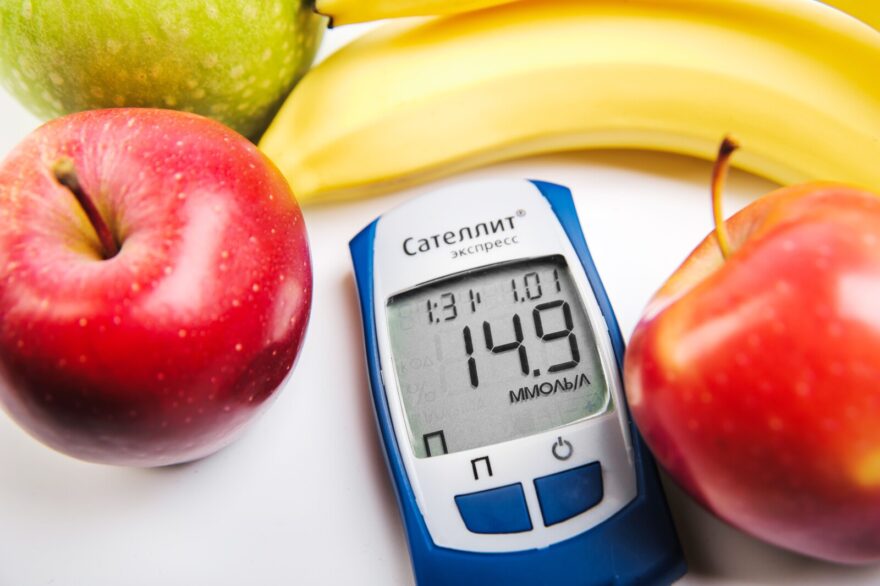
Maintaining healthy blood sugar levels is important for overall health and wellness. In this article, you’ll learn more blood glucose basics and 11 tips to help keep your blood sugar levels in check.
What is blood glucose?
Glucose, also referred to as “sugar”, provides the fuel required by cells to produce energy. The body gets glucose from carbohydrates found in food. When food is digested, the body converts carbs into smaller forms of sugar (known as monosaccharides), one of which is glucose.
Glucose is absorbed from the gut into the blood, which causes blood glucose (aka sugar) levels to rise (known as hyperglycemia). This rise in blood sugar signals the pancreas to secrete a hormone into the blood called insulin. Insulin is the mechanism by which glucose can enter cells so it can be converted into energy. As glucose is absorbed into cells, blood sugar levels come back down to normal.
Excess glucose that is not needed by cells is stored as glycogen in the liver and muscles. If the body goes long enough without food, blood sugar levels fall below normal (known as hypoglycemia). This triggers the pancreas to secrete another hormone called glucagon, which helps break down glycogen into glucose, causing blood sugar levels to rise back to normal.
Many people scour the internet for “how to lower blood sugar”, but blood sugar levels naturally fluctuate up and down throughout the day, depending on the frequency, amount, and type of food consumed. Maintaining normal, healthy blood sugar levels is essential for optimal health. Whenever the body doesn’t regulate high blood sugar levels properly, this can lead to serious health conditions such as diabetes, obesity, and heart disease.
Tips for healthy blood sugar maintenance
Try these 11 tips to help keep your blood sugar in check.
1. Timing and consistency is key – Keep eating habits consistent. The goal is to avoid major spikes and valleys in blood sugar levels, and one way to do that is to avoid overloading the body with a huge meal. Instead, try to eat roughly the same amount of carbs at the same time each day, including several small meals and snacks. To keep portions consistent, try measuring your food and using meal prep equipment to have meals and snacks ready to go.
2. Reach for complex carbs – There are two types of carbs that the body converts into glucose: simple and complex. Simple carbs are found in table sugar, processed grain foods, white rice, white bread, jams, soft drinks, and candy. The body rapidly converts simple carbs into blood glucose, which can cause blood sugar levels to rise quickly. Try to focus on eating more complex carbs (instead of simple carbs), which are found in foods such as green vegetables, whole grains, and beans. The body digests these foods more slowly than simple carbs, which helps keep blood sugar levels more stable.
3. Pump up the protein – Protein can also affect blood glucose levels. Proteins help regulate blood glucose levels by slowing the body’s absorption of carbs. The body can also convert proteins into glucose if necessary (through a process called gluconeogenesis). Combining carbohydrates with protein helps to slow the digestion and absorption of carbs into the blood.
4. Don’t avoid fats – Fats help slow the body’s absorption of carbs, primarily by slowing the rate at which food passes from the stomach into the small intestine, where nutrients are absorbed into the blood.
5. Try the “Plate Method” – The American Diabetes Association recommends a simple way to put it all together with the “Plate Method”. This simply means grabbing a 9-inch plate and filling half of it with non-starchy veggies, one-quarter with protein, and one-quarter with carbs. Then top it off with a glass of water or a zero-calorie beverage [1].
6. Watch your waistline – Being overweight can negatively impact the sensitivity of the body’s cells to insulin. When cells become insulin resistant, excess glucose remains in the blood rather than being utilized by cells for energy. If you want to learn more about how to lose weight, visit the GNC Learning Center for science-backed blog articles. If you’re strapped for time, a meal replacement is a surefire way to reduce your daily calorie intake and manage portion sizes.
7. Exercise, exercise, exercise – Regular exercise, especially aerobic activities like walking and swimming, is one of the most important things you can do. Not only does it help maintain a healthy body weight (which helps with blood glucose), it also uses a lot of energy in the form of glucose. This means – if there is excess glucose in the blood, exercise can help lower blood sugar levels.
READ MORE: HOW TO START EXERCISING AND MAKE IT A HABIT THAT STICKS
8. Manage stress levels – Stress triggers the body to secrete hormones such as cortisol and norepinephrine that cause blood glucose levels to rise in order to meet the body’s increased energy demand. Find ways to keep stress at bay, such as meditation, stretching exercises such as yoga, or breathing techniques.
9. Get a good night’s sleep – Being overly tired can lead to poor diet choices. Aim for at least 7 hours of sleep each night.
10. Avoid smoking – Nicotine in tobacco products causes the adrenal glands to secrete the hormone adrenaline, which stimulates the liver to produce glucose.
11. Get a checkup – If you are concerned about your blood sugar levels, consult with your healthcare provider to get an in-depth workup.
References
1. Eat Good to Feel Good. American Diabetes Association. https://diabetes.org/healthy-living/recipes-nutrition/eating-well

