Why a Multivitamin?
Multivitamins are the most popular dietary supplement with an estimated one-third of Americans taking one. By providing key vitamins and minerals, multis help to fill the nutrient gaps you may not be getting from diet alone. This is important because an inadequate intake of vitamins and minerals has been linked with many chronic health concerns.
3
Why should you take a multivitamin? Think of it as nutritional “insurance” to support overall health. Men should look for a multivitamin specifically formulated for men, which has vitamins and minerals at doses for men’s needs. For example, the recommended daily intakes of vitamin A, vitamin C, and several B vitamins are higher for men than for women.
4
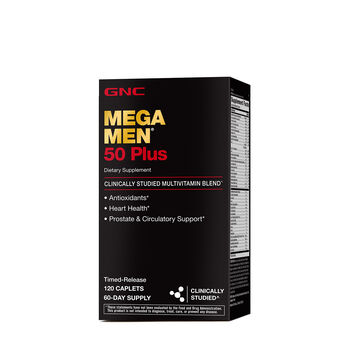
GNC Mega Men® 50+ is specially formulated for men over the age of 50 with a clinically proven blend of nutrients–plus it offers support for heart health, prostate health, and circulation. With decades of experience, a team of GNC Scientists and Registered Dietitians formulated a high-potency multivitamin and put it to the test in a clinical study.
One of the most exciting results of the study was that people taking GNC’s multivitamin blend reported feeling better when compared to those taking a placebo. The study also showed that higher levels of nutrients in GNC’s multivitamin blend were observed/ seen in the body. This indicates GNC’s multivitamin blend outperformed the placebo and basic multivitamin for the absorption of B-vitamins, essential antioxidants and immune-supporting nutrients.^
There were impressive results that were specific to men. Men had the following results after six weeks of supplementation with GNC’s high-potency multivitamin blend compared to those who took the placebo:
Improvements in blood levels of crucial B vitamins, which are essential for energy production and metabolism:
- 1,063% improvement in vitamin B6 levels^#
- 161% improvement in pantothenic acid levels^#
Improvements in blood levels of crucial cell-protecting antioxidant and immune-defending nutrients:
- 27% improvement in selenium levels^#
- 23% improvement in lutein levels ^#
- 62% improvement in beta-carotene levels (precursor to Vitamin A)^ #