



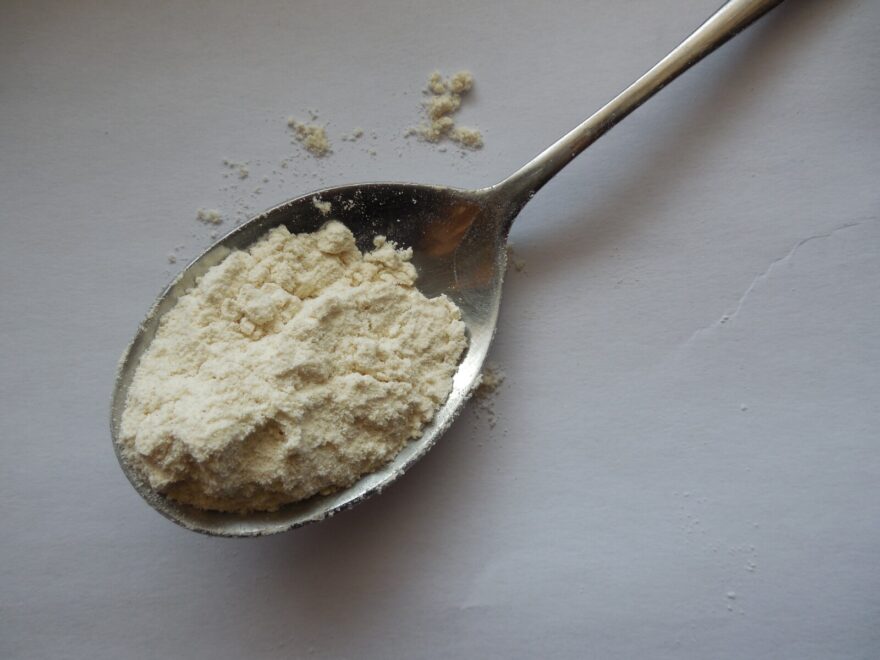
Creatine is one of the most used athletic supplements known for helping ATP energy production in muscle cells. Creatine also supports muscle protein synthesis and promotes cellular hydration. Ask any of your gym-goer friends or swipe through fitness influencers on social media and you’ll likely see creatine as part of their daily routine.
There’s a lot of debate in the fitness world and web about some common creatine myths, such as creatine loading phase myth or creatine hair loss myth. But have no fear, GNC is here to help you sort through the noise…. It’s time for creatine myth busters.
2025 Updates! You’ve asked, and we’ve answered. We added a few of the most frequently asked questions we’ve received on social media!
Myth: Creatine loading is not needed.
Fact: Creatine loading decreases the number of days for muscle cells to be fully saturated with creatine.
Creatine loading is a hot topic – to load or not to load. Some will say it’s not necessary and others say it’s the only way. So, is it a myth or fact? Based on the scientific evidence, creatine loading is far from mythical. In fact, reviewing creatine supplement research shows around 50% of study protocols include a creatine loading phase.
Creatine loading consist of taking 20 grams of creatine for 5-7 days followed by a maintenance phase of 3-10 grams per day [1]. The loading phase reduces the amount of time it takes for the muscle cells to become saturated with creatine. Either from our diets, or our liver making creatine on its own, we only get to 60-80% saturation. Which means supplementing is a great tool to max out our cellular capacity for creatine. The International Society of Sports Medicine supports creatine loading because it is more efficient than taking a daily 5 gram dose of creatine to fully saturate the muscle cells. Going this route would take approximately 28 days to fully saturate muscle cells, so loading helps expedite the process [1]. So no, it’s not a myth.
Myth: Creatine causes hair loss.
Fact: There is no scientific evidence to support this claim.
The only speculation about creatine causing hair loss is based on one study conducted in 2009 with college-aged rugby players. Researchers found higher levels of dihydrotestoerone (DHT) in the group who took creatine supplements compared to the placebo group. However, there were no physical reports of hair loss documented during the study period. This myth is related to hair loss because some hair loss in men has been associated with DHT levels causing hair loss or baldness [2]. These results have not been replicated, providing no evidence creatine supplementation causes hair loss.
Myth: Creatine Causes Water Retention, Weight Gain, and Bloating.
Fact: Creatine does increase water retention in the beginning of use, but long term the evidence isn’t there.
A function of creatine in our bodies is that it helps provide hydration to cells in the muscle. When first taking a creatine supplement, water retention appears due to increases in intracellular volume (sciency words for “space inside the cell”). However, long-term creatine studies show no significant changes in total body water weight [3]. Meaning, you won’t see long-term water retention from creatine supplementation. In other words, you don’t need to worry about creatine causing water bloat.
Myth: Creatine causes kidney damage.
Fact: Creatine supplementation does not change kidney function in healthy individuals.
Creatine supplementation has been deemed as safe for consumption with a large body of scientific evidence to support safety. In 2009, The American College of Sports Medicine called for further investigation of creatine supplementation to prove its safety for consumers [1]. From the scientific evaluation, in healthy individuals, kidney and liver functions are within normal limits. There is no evidence to suggest creatine causes kidney damage [3]. As with any products, certain individuals may have an unwanted reaction but generally, creatine has substantial scientific evidence to support the safety of consumption.
In conclusion, there are quite a few myths about creatine that just aren’t supported by scientific evidence.
Read More: 3 Benefits of Creatine
Myth: Creatine causes dehydration.
Fact: False!
Creatine draws water into muscle cells supporting hydration, the opposite of dehydration.
Myth: Creatine is a marketing scam.
Fact: False!
Creatine is most certainly is NOT a scam. There are THOUSANDS of research studies supporting creatines benefits for exercise performance. And we’re learning more everyday!
Myth: creatine Is scientifically proven.
Fact: True!
You bet it is! Creatine is the most well researched sports nutrition supplement on the market. It’s safe, effective, and can support your goals.
Myth: I need to do a creatine load or you need a creatine load for it to be effective.
Fact: False!
If you aren’t looking for immediate performance results, 3-5 grams daily will saturate muscle stores after one month. Learn more here about creatine loading.
Myth: Is creatine a steroid?
Fact: False!
Creatine is NOT a steroid. It is a compound, like an amino acid, that naturally occurs in the body and is stored in our muscles and brain.
Myth: Creatine is only useful if you lift heavy.
Fact: False!
Definitely false! Endurance athletes, like runners and cyclists, still need quick burst of energy to climb hills, overtake a competitor, or sprint to the finish – and fully saturated creatine stores can help them get there.
Myth: Creatine is only for men.
Fact: False!
Super false. Women make less creatine AND they consume less creatine in their diets. Even more reason for women to supplement with creatine!
Myth: Creatine impacts hormones
Fact: False!
Creatine is not a hormone; it’s a naturally occurring compound found in the muscles and brain. Creatine can help women during hormone fluctuations by providing cognitive benefits, energy stores, and maintaining muscle mass.
Myth: I can take creatine, exercise less, and get stronger.
Fact: False!
You’re still going to need to exercise. But the exercise you do can be even more effective with creatine. When your muscles are fully saturated with creatine phosphate, it means more energy for working muscle, faster recovery between sets, more sets, more reps, and which equals more strength gains.
Myth: Creatine is only effective for people who want to build muscle mass.
Fact: False!
Creatine is beneficial for EVERYONE, even those who are not exercising intensely. It becomes especially important as we age when we begin losing muscle mass. Creatine can help maintain muscle mass and strength. It’s also helpful during periods of weight loss, by protecting your hard earned muscle mass. And can provide cognitive benefits!
In conclusion, there are quite a few myths about creatine that just aren’t supported by scientific evidence.
References
- Kreider RB, Kalman DS, Antonio J, Ziegenfuss TN, Wildman R, Collins R, Candow DG, Kleiner SM, Almada AL, Lopez HL. International Society of Sports Nutrition position stand: safety and efficacy of creatine supplementation in exercise, sport, and medicine. J Int Soc Sports Nutr. 2017 Jun 13;14:18. doi: 10.1186/s12970-017-0173-z. PMID: 28615996; PMCID: PMC5469049.
- van der Merwe J, Brooks NE, Myburgh KH. Three weeks of creatine monohydrate supplementation affects dihydrotestosterone to testosterone ratio in college-aged rugby players. Clin J Sport Med. 2009 Sep;19(5):399-404. doi: 10.1097/JSM.0b013e3181b8b52f. PMID: 19741313.
- Antonio J, Candow DG, Forbes SC, Gualano B, Jagim AR, Kreider RB, Rawson ES, Smith-Ryan AE, VanDusseldorp TA, Willoughby DS, Ziegenfuss TN. Common questions and misconceptions about creatine supplementation: what does the scientific evidence really show? J Int Soc Sports Nutr. 2021 Feb 8;18(1):13. doi: 10.1186/s12970-021-00412-w. PMID: 33557850; PMCID: PMC7871530.

