



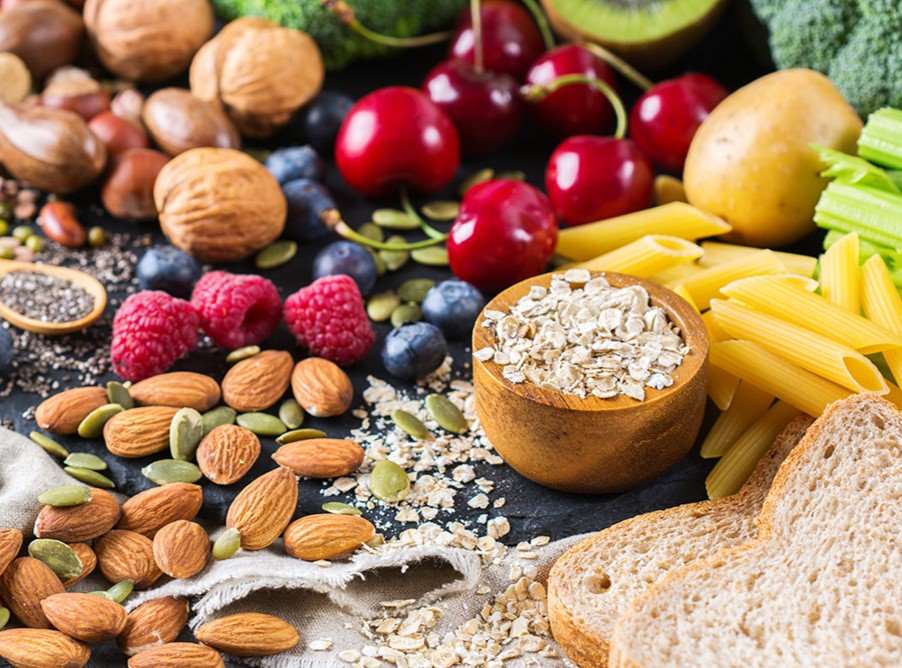
What does the word fiber make you think of? I asked some friends and family what the word fiber makes them think of. The most common answer I heard was “poop.” I wasn’t surprised by this, but I’m here to tell you today that while fiber’s role in regularity is very important, there is much more to this wonder-nutrient than what happens to it post-digestion!
Related Reading: FIBER FOR WEIGHT LOSS GOALS
Dietary Fiber—Defined
Dietary fiber is a carbohydrate from plant sources that is resistant to digestion and absorption in the intestines (a.k.a. breakdown by digestive enzymes and mechanical food processing in the digestive tract).1 Most carbohydrates are broken down into sugar molecules that can be absorbed and used for energy. Fiber, however, passes through without being digested because the body does not possess the enzymes needed to make these special carbohydrates absorbable. Just because the fiber isn’t being digested and absorbed for energy doesn’t mean that it isn’t helping in other ways. The fiber is fermented by the microbes that live in our digestive system and provides bulk to form stool which keeps things moving along. In fact, there are all sorts of benefits of eating fiber that we’ll review later.
Types Of Fiber: Soluble Vs. Insoluble
Fiber is classified based on its solubility in water, so the two types of fiber are called soluble and insoluble. There are benefits that are more specifically attributable to each type of fiber, but many foods contain both types of fiber in varying amounts.2
What Happens To Fiber In The Digestive System?
Soluble Fiber
- Absorbs water and forms a gel.
- The body can absorb some calories from soluble fiber, but much less than simple carbohydrates like table sugar or white bread.
- The microbes in the large intestine ferment soluble fiber as it passes through the later stages of digestion.
Insoluble Fiber
- Does not absorb water.
- The body does not absorb any calories from insoluble fiber.
- Provides bulk to stool allowing for elimination to be easier and more comfortable.
What Are Good Sources Of Fiber?
Soluble Fiber
Insoluble Fiber
- Grains like barley, wheat germ, oatmeal and whole wheat.2
- Legumes and pulses (dried edible seeds) like peas, kidney beans, white beans and lentils.2
- Vegetables like broccoli, carrot, beets, spinach, turnips and green onions.2
- Fruits like kiwi, unpeeled apple, pear and pineapple.2
- Nuts and seeds like flax, sesame seeds, almonds, walnuts, or sunflower seeds.2
How Much Fiber Do You Need?
In the most recent guidelines from the FDA, the Daily Value for dietary fiber is 28g per day.3 Unfortunately, public health research indicates that most Americans aren’t getting enough fiber. The government has even gone so far as to call fiber a nutrient of public health concern because low intake of fiber can have negative health consequences. The best way to get enough fiber into your diet is to focus on eating more fruits, vegetables, legumes (like dried beans), pulses (like lentils) and whole grains.
Fiber Has A Heap Of Health Benefits
Higher intake of dietary fiber is associated with a lower risk of certain health conditions.1 These health benefits exist because of the various functions of fiber. Here’s a quick summary:2, 5, 6
- Adds bulk to the diet (and stool) which can help reduce appetite for weight management, support regularity and prevents constipation.
- Forms a gel in the intestines, trapping less desirable nutrients (like simple carbohydrates and fat) which may help to keep blood glucose steady and reduce cholesterol.
- Promotes optimal pH in the intestines and speeds passage of food through the digestive system.
- Fermented by healthy bacteria in the digestive system to support the microbiome which may support everything from mood to reducing inflammation.
How Can You Increase Your Fiber Intake?
With all those health benefits, you’re probably already trying to think of ways to get more fiber into your diet! Here are a few ideas to get you started:
- Add beans, peas or lentils to anything you can. Having a salad, throw in some chickpeas. Making nachos, don’t forget to sprinkle on some black beans. Indulging in chili, throw in some kidney beans to chili. This will make your meals more filling and nutritious!
- Go for convenience! If you are more likely to eat the pre-cut pineapple from the grocery store than the whole one that will sit on your counter because you don’t feel like dealing with the mess, buy the pre-cut! Keep a tray of cut veggies in your refrigerator for quick snacking. Crudite should not be reserved only for a party!
- Keep a delish veggie soup in your refrigerator for a quick snack or lunch.
- Experiment with new ways of preparing veggies for dinner. Frozen green beans with butter is a fine way to eat a veggie, but it can get boring. There are endless ways to prepare vegetables, from roasting to preparing with culturally-inspired sauces. You can even find some healthy recipes to keep things interesting.
- Trade up to whole wheat breads and pastas–leave that white bread in your low-fiber past!
- Sprinkle some flaxseeds on your yogurt. Flaxseeds are an INCREDIBLE source of fiber, so load up on these tiny seeds for giant benefits!
If your life until reading this article has been fiber-phobic, start slow when increasing fiber intake. Coming too strongly out of the gate can result in gas and discomfort. It’ll only take a couple of weeks to get your digestive system primed and ready to handle all of that health-promoting fiber!

